
In Toronto, at the Royal Ontario Museum (if you haven’t visited you really should) are two square clay building blocks with an inscription stamped upon them reading, “Nebuchadnezzar, king of Babylon, who provides for (the temples) Esagila and Ezida, the eldest son of Nabopolassar, king of Babylon, am I”. 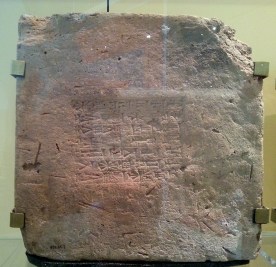 King Nebuchadnezzar II of Babylon was a prolific builder. According to some sources, Nebuchadnezzar’s workers used over 15,000,000 bricks in his building projects and almost all of them carried the same inscription.
Nebuchadnezzar was keenly aware of Egyptian Pharaoh’s and Mesopotamian monarchs who had been erased from the historical record by envious and resentful successors. The Babylonian king would not allow the same thing to happen to him. No one could ever take credit for his greatest work, the rebuilding of the great capital of Babylon but the man whose name and esteemed royal parentage was pressed into the very walls and foundations of everything he built. Continue reading
 Bible Reading Archeology